



Habitat Banks
Innovation for ecosystem conservation
What are Habitat Banks?
Habitat Banks are an innovative model for environmental investments and compensations, proven successful in conserving ecosystems in other countries. These areas, whether privately or publicly owned, are managed for their significant natural value. In return for their protection and sustainable management, the Banks enable third parties to meet their environmental obligations and compensate for impacts related to development.
This model not only promotes conservation but also ensures advanced investments with quantifiable outcomes through a payment-for-results scheme. Additionally, it allows for the allocation of voluntary resources from individuals and businesses by issuing biodiversity credits, driving innovative projects in a growing market.
How do they work?
1. Preservation and restoration areas are pre-established.

● Guarantee of technical and legal compliance.
● Definition of the number of available credits.
● Design of management plans/protocols.
● Contractual agreements to secure long-term sustainability.
● Registration, reporting, and monitoring to the Ministry of Environment and Sustainable Development (MADS).
2. Companies that are required to compensate buy credits.

● Execution of a usufruct agreement.
● Presentation and promotion of the mechanism to local and regional players.
● A contract is established between the company and the Habitat Bank for the necessary credits.
● The compensation plan is designed.
● Payments are made when specific environmental milestones are achieved.
● Preservation and restoration actions are implemented.
● Compliance is expedited, minimizing the risk of extra costs or extended timelines for the client.
What Do Habitat Banks Offer?

A credit represents the technical, legal, and financial management required to achieve effective compensation over a 30-year period.
What Is Included?
● Land Management
● Plan Formulation
● Baseline Data Collection
● Landowner Incentive
● Activity Implementation
● 30-Year Monitoring
● Supervision
● Reporting to Environmental Authority
● Trust Fund Management
● Usufruct Management
● Sustainability Fund
● External Auditing
● Contractual Management
The closure of each obligation will last as determined by the compensation and/or investment plan, and the respective approval from the environmental authority.
A credit may only be sold once.
Habitat Bank Guarantees

1. Technical
● Defined management plan.
● Monitoring and oversight plan with biodiversity impact indicators.
● External audit.

2. Financial
● Funds are managed via a trust.
● Sustainability fund to ensure long-term maintenance resources.

3. Legal
● Habitat Bank registered with the MADS (Ministry of Environment and Sustainable Development).
● Area is secured through a usufruct agreement with the landowners.
● Operational contract for the area designated as a Habitat Bank.
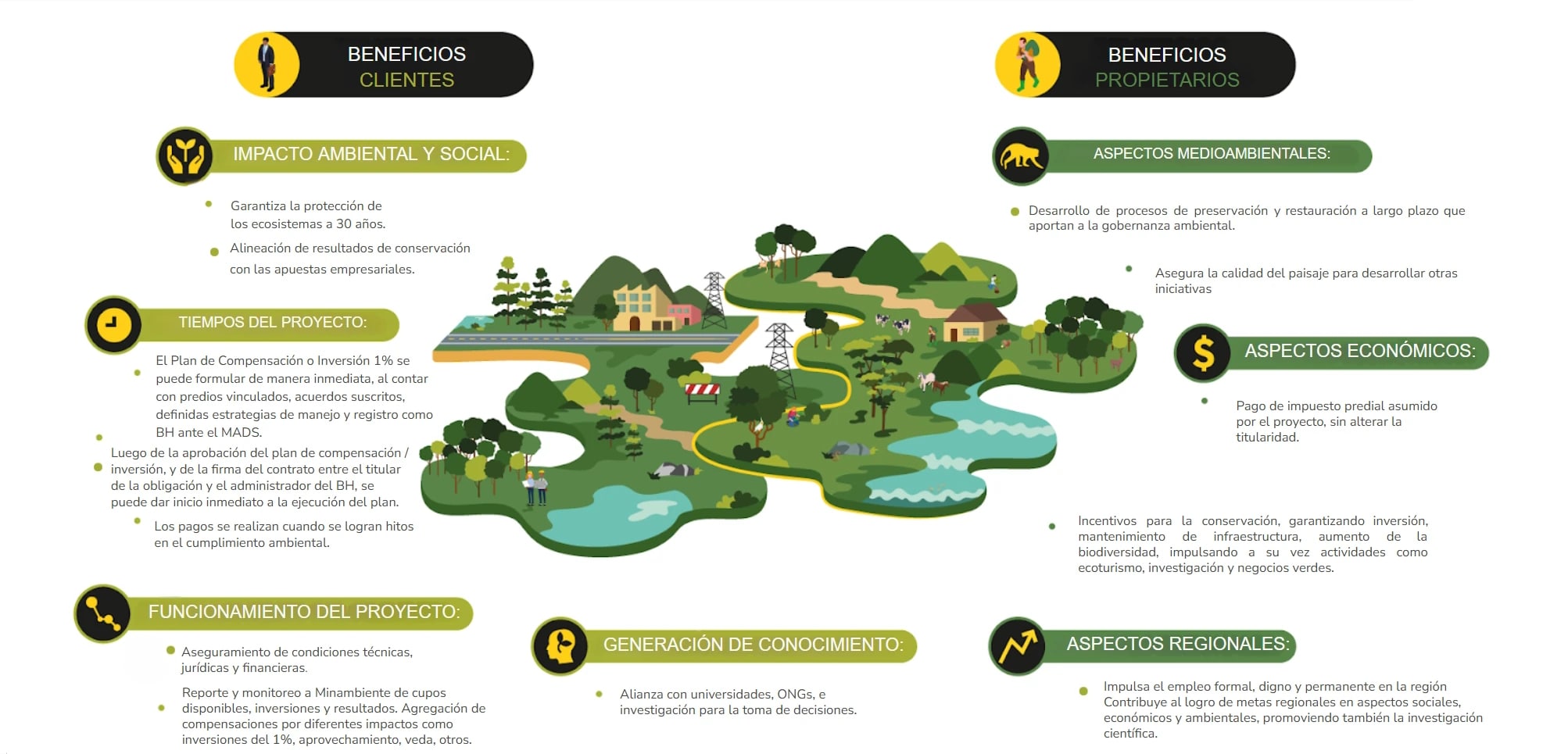
Contribution
● Attract private investment to stimulate exceptional conservation projects.
● Consolidate environmental compensations to create meaningful impacts.
● Diversify and democratize the management of biodiversity, focusing on achieving results.
● Accelerate and ensure compliance with environmental obligations.
● Stimulate the rural economy, leading to local development.
● Safeguard the most well-preserved ecosystems and support succession processes in those that are more degraded.
● Create knowledge on methodologies for the propagation of native species.

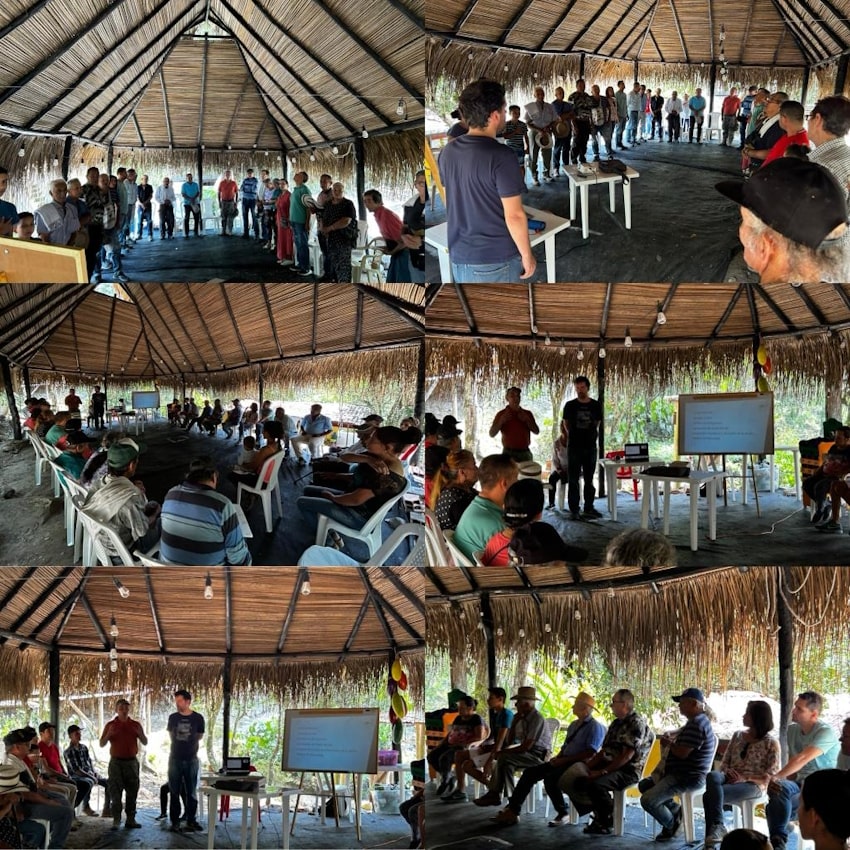
Impact on the Regions
● Creates new business opportunities in regions with challenging conditions.
● Generates new employment opportunities for local residents.
● Develops new skills and knowledge in workforce involved in the project.
● Encourages education and environmental conservation of ecosystem resources in the regions.
Discover Our Habitat Banks
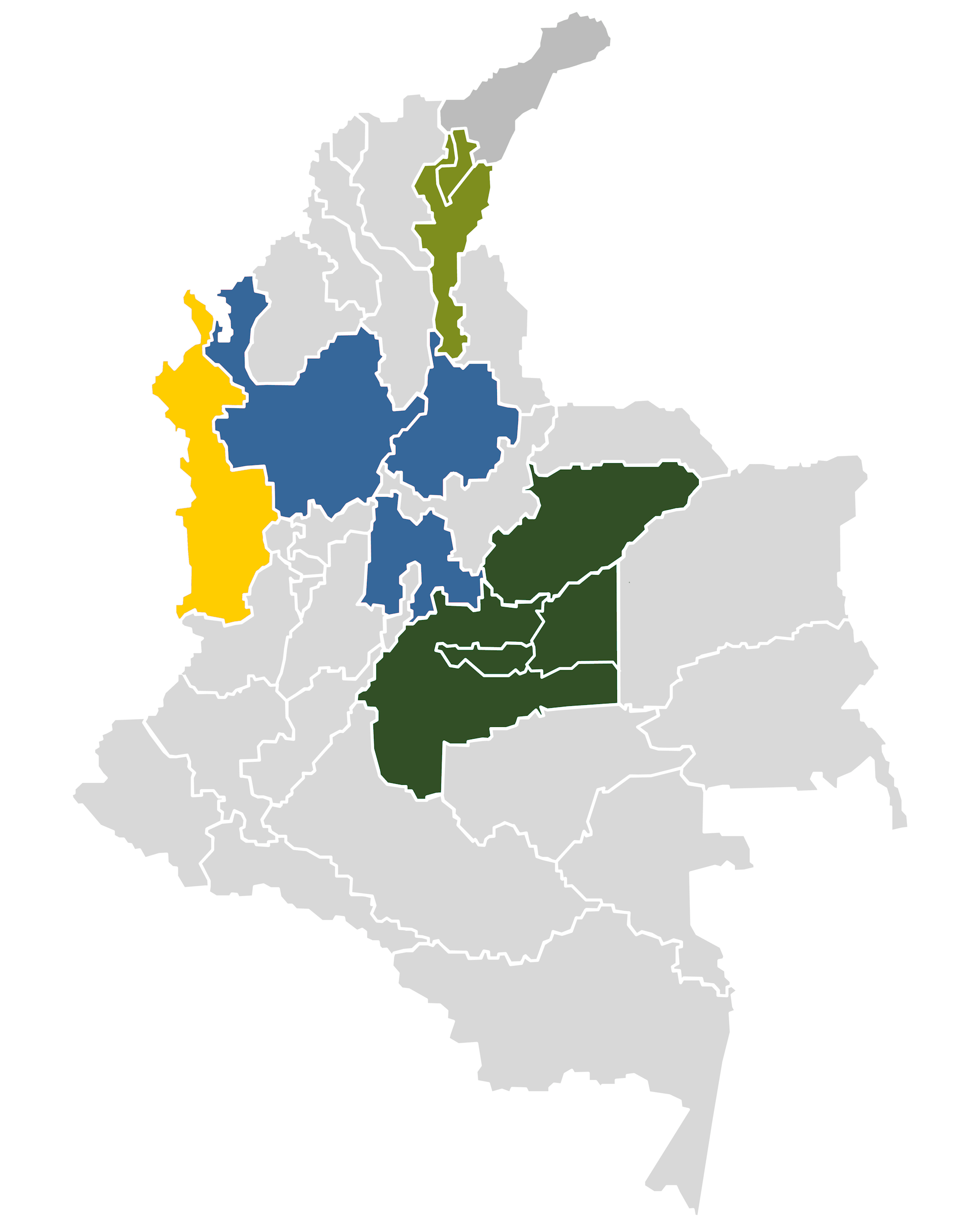
EXPLORE BANK
EXPLORE BANK
EXPLORE BANK
EXPLORE BANK
EXPLORE BANK
EXPLORE BANK
EXPLORE BANK
EXPLORE BANK