



The “Raíces de Peralejo” Nursery Receives ICA Certification: A Strategic Driver for Compensations in Cesar
02/03/2026
Ika Refuge Habitat Bank: A Model of Technical Cooperation for the Protection of the Karst Corridor
06/03/2026The “Raíces de Peralejo” Nursery Receives ICA Certification: A Strategic Driver for Compensations in Cesar
02/03/2026Ika Refuge Habitat Bank: A Model of Technical Cooperation for the Protection of the Karst Corridor
06/03/2026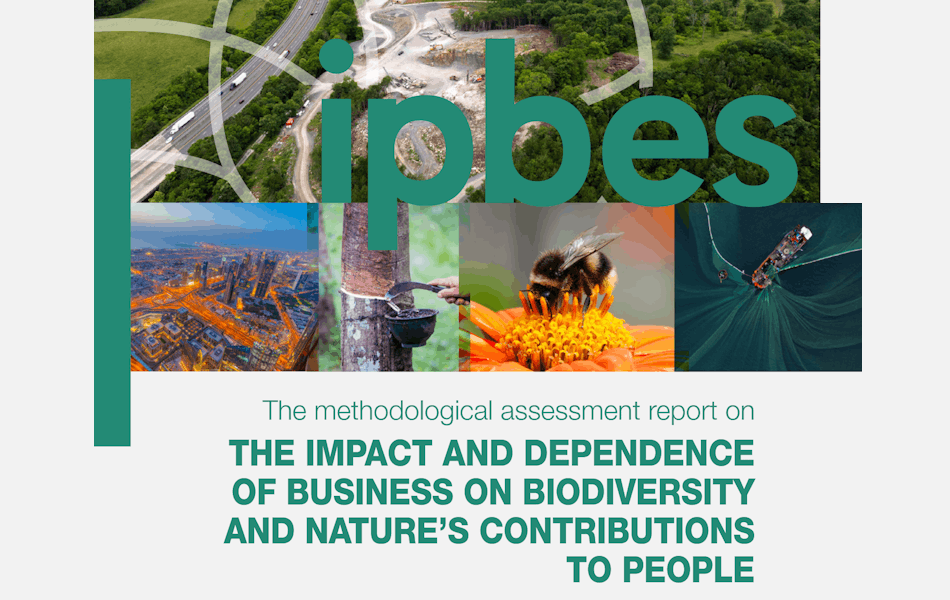
The IPBES Report on Business and Biodiversity.
The recent publication of the Business and Biodiversity Assessment Report by the Intergovernmental Science-Policy Platform on Biodiversity and Ecosystem Services (IPBES) provides a strong foundation for understanding that nature is not an externality, but rather the most critical strategic asset of our time.
Prepared over three years by 79 leading experts from 35 countries and all regions of the world—coming from both the scientific community and the private sector—and developed in consultation with Indigenous peoples and local communities, the report concludes that current business operating conditions are not always compatible with achieving a just and sustainable future, and that these conditions also perpetuate systemic risks.
From Terrasos’ perspective, this report is an essential tool for promoting a balance between the economic, social, and environmental functionality of territories, as it not only identifies risks but also outlines a clear pathway for transforming business models.
Biodiversity Finance in Numbers
The report presents compelling statistics that illustrate the current disconnect between economic growth and ecosystem health:
- Growth vs. Natural Capital: Between 1820 and 2022, the global economy grew from $1.18 trillion to $130.11 trillion. However, since 1992, while human-produced capital increased by 100% per capita, natural capital (ecosystems and resources) has declined by 40%.
- Impact Financing: In 2023, financial flows with direct negative impacts on nature were estimated at $7.3 trillion, of which private capital accounts for $4.9 trillion and harmful public subsidies for another $2.4 trillion.
- Investment Gap: Only $220 billion in public and private flows were directed toward activities that contribute to the conservation and sustainable use of biodiversity.
- Corporate Invisibility: Fewer than 1% of companies that publicly report mention their impacts on biodiversity in their current disclosures.
Understanding Dependency and Impact
One of the report’s core pillars is that all businesses both depend on and impact biodiversity, either directly or through their value chains.
The degradation of nature’s contributions to people—such as water regulation, pollination, or erosion control—creates physical, transition, and systemic risks that threaten global financial stability. For businesses, the first step is recognizing that their long-term operations depend on the regeneration of these ecosystem services.
Levels of Decision-Making and Action
To facilitate the transition, IPBES identifies four levels of decision-making where businesses can act to reverse biodiversity loss and provides examples, including the following:
|
Decision Level |
Examples of Actions Proposed by IPBES |
|
Corporate |
For the financial sector specifically:
|
|
Operations |
|
|
Value Chain |
|
|
Portfolio |
|
Toward an Enabling Environment
The report concludes that under current conditions, what is profitable for a company often results in biodiversity loss. To change this, it is essential to create an “enabling environment” through public policy, financial system reforms, and shifts in social values that incentivize conservation and sustainable use.
At Terrasos, we believe that access to technical information, transparency, and interdisciplinary collaboration are key for companies to move from commitment to verifiable action. The knowledge already exists; the challenge is integrating it into the core of economic decision-making.
Further Information
You may consult the full IPBES document at the following links: