




Banco de Occidente and Terrasos promote investment in biodiversity through the use of credit cards
10/02/2026
The IPBES Report on Business and Biodiversity
02/03/2026Banco de Occidente and Terrasos promote investment in biodiversity through the use of credit cards
10/02/2026The IPBES Report on Business and Biodiversity
02/03/2026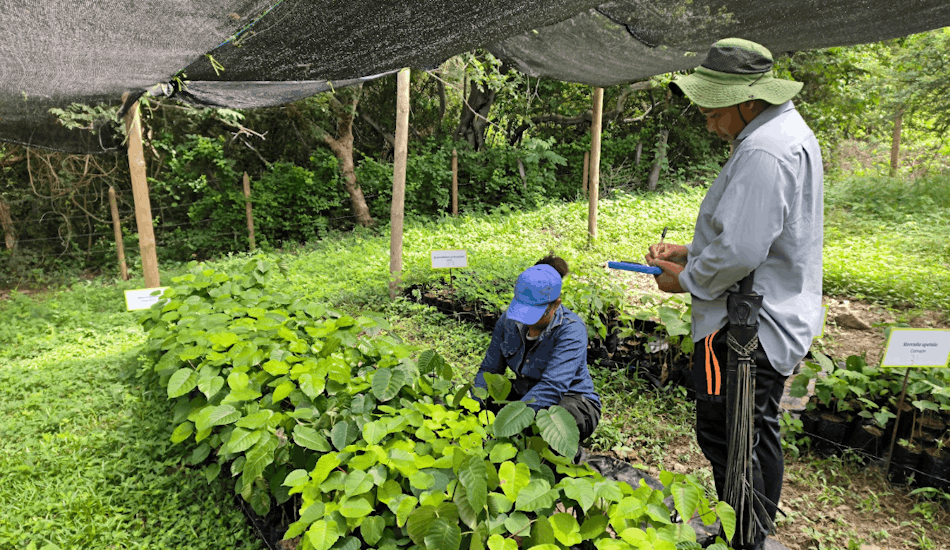
The "Raíces de Peralejo" Nursery Receives ICA Certification: A Strategic Driver for Compensations in Cesar.
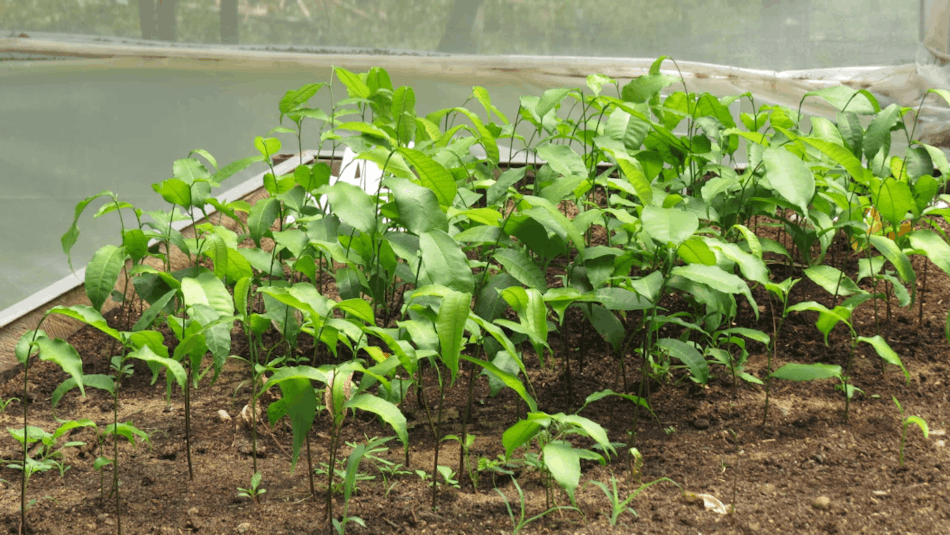
At Terrasos, we continue to consolidate milestones that transform how Colombia invests in its biodiversity. We are pleased to announce that the Raíces de Peralejo Nursery, the operational heart of our La Lope Habitat Bank, has formally obtained registration as a Producer and Commercializer of forest propagation plant material from the Colombian Agricultural Institute (ICA).
This certification, formalized through Resolution No. 00033953 of 2025, is not just an administrative procedure; it is the technical guarantee we offer companies with environmental compensation obligations to ensure the success of their restoration projects in the country's most threatened ecosystem: the Tropical Dry Forest.
Technical Security for Environmental Investment
For organizations seeking to comply with their legal requirements for biotic compensation and 1% investment in the department of Cesar, the availability of certified plant material is a critical success factor. Registration with the ICA certifies that our seedlings meet the necessary phytosanitary and quality standards to guarantee survival in the field.
Currently, the nursery has an annual production capacity of 5,900 seedlings, covering a diverse portfolio of more than 130 native species of great ecological relevance. This operational robustness positions us as a strategic ally capable of supplying high ecological value plant material required for the execution of effective and resilient biotic compensation plans..
A Rigorous "Seed-to-Forest" Process
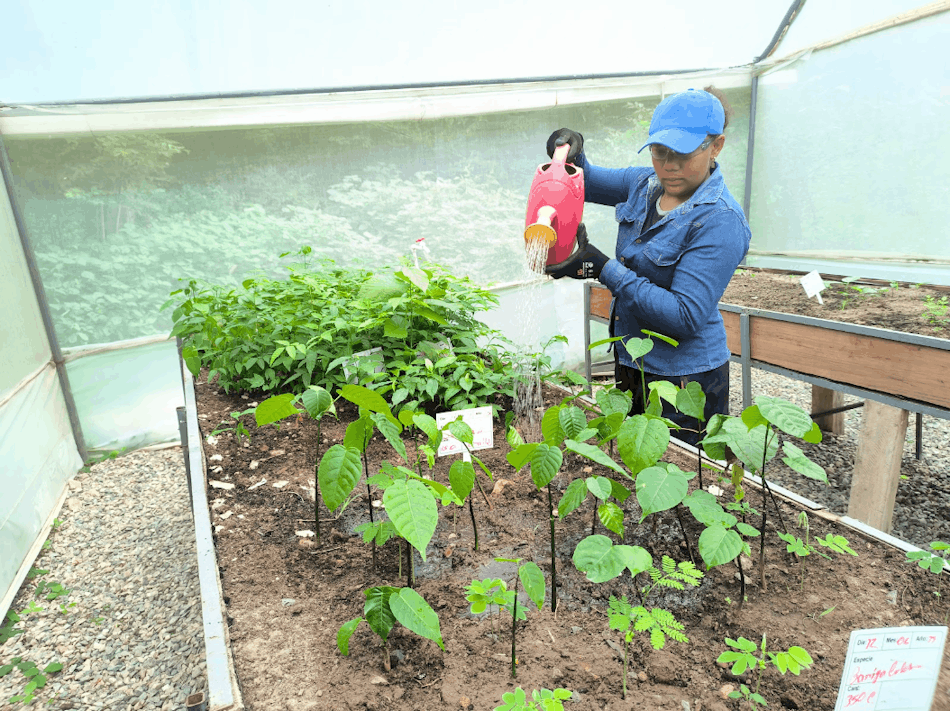
Located in the Aguas Blancas township, Valledupar, the nursery operates under technical protocols supervised by agroforestry engineers. The process guarantees genetic traceability by collecting seeds directly from selected seed trees within the 318.9 hectares of the La Lope Habitat Bank.
Our facilities include germination zones, bagging areas, and a 100m2 hardening-off zone, where the seedlings are acclimated before being transplanted, ensuring their resistance to the climatic conditions of Cesar.
"The certification of the Raíces de Peralejo Nursery reinforces our value proposition as strategic allies for the private sector. By integrating the production of certified plant material within the operation of the Habitat Bank, we eliminate operational uncertainties for our clients.
At Terrasos, we don't just manage hectares; we produce the biological foundation that allows companies to transform their legal obligations into real, measurable, and lasting conservation assets. The future of environmental compensation in Colombia demands science, technical rigor, and impeccable execution, elements we reaffirm today with this new achievement."
Mariana Sarmiento Aparicio, CEO of Terrasos
Peralejo: The Nursery's Flagship Species
The Peralejo species (Curatella americana), which inspires the name of our nursery "Raíces de Peralejo" (Peralejo Roots), is an emblem of the Tropical Dry Forest in the department of Cesar. It is recognized for its high resistance to forest fires, in addition to its notable capacity for resprouting and adaptation to drought. These qualities allow it to survive in environments where fire is a recurring factor, fulfilling a fundamental role in the natural regeneration and stability of affected areas in the region.
Species in Threatened Category
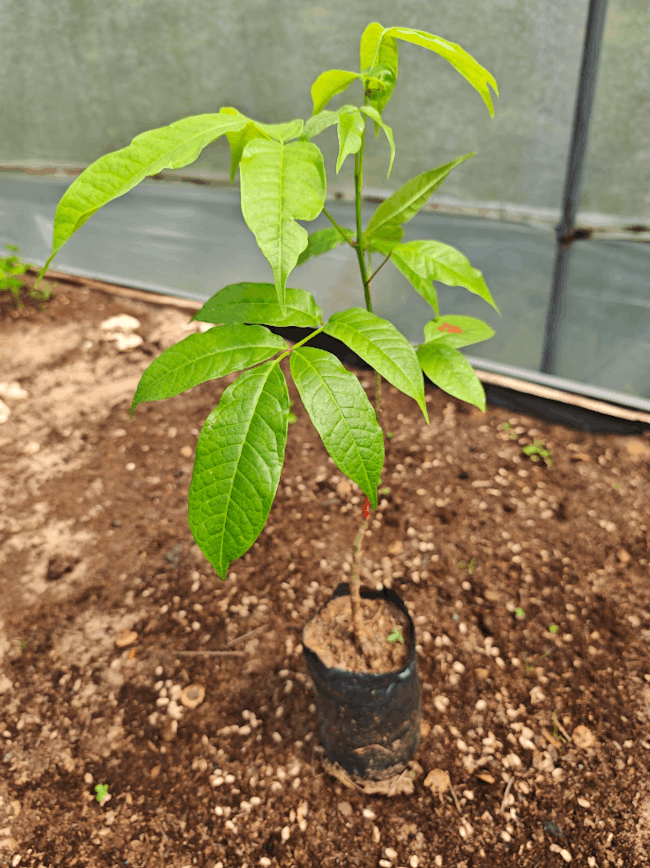
We propagate critical species whose preservation is mandatory under national and international standards::
- Carreto (Aspidosperma polyneuron): Classified as Endangered (EN) by both the Ministry of Environment and the IUCN. It is one of the most prominent timber species, and its protection is essential due to historical pressure on its populations.
- Cedar (Cedrela odorata): Categorized as Vulnerable (VU) globally and Endangered (EN) in Colombia. Its trade is regulated under CITES Appendix III, which requires rigorous technical traceability.
- Pachira (Pachira quinata): Identified as an Endangered (EN) species in the MADS list of threatened wild species. Its inclusion ensures the recovery of taxa at high risk of disappearance.
- Balsamito (Apuleia leiocarpa): A forest species included in our production registry that contributes to the representation of endangered native flora in the Caribbean.
Key Species for Successful Restoration
In addition to the threatened species, we produce "engine species" that are vital for their ecological functionality and capacity to accelerate the recovery of the Tropical Dry Forest:
- Ebony (Libidibia punctata): Essential for the dry forest structure; its ability to develop in disturbed areas makes it a pillar for rapidly recovering vegetation cover.
- Puy Lumbre (Handroanthus billbergii): Highly recommended for the restoration of degraded soils due to its colonizing capacity and tolerance to direct solar radiation.
- Guácimo (Guazuma ulmifolia): A fast-growing species with high light requirements. It is vital in the initial stages of restoration, as it tolerates open spaces and helps prepare the ground for more sensitive species.
- Caracolí (Anacardium excelsum): Fundamental for the protection of water basins and riparian zones, ensuring biological connectivity and water regulation on the properties.
Guaimaro (Brosimum alicastrum).
February 20, 2026