




Mariana Sarmiento Brings Biodiversity Innovation to the World Economic Forum in Davos.
23/01/2025
The Guardian of El Globo Habitat Bank: Francisco and His Life Between the Forest and the Mist
30/01/2025Mariana Sarmiento Brings Biodiversity Innovation to the World Economic Forum in Davos.
23/01/2025The Guardian of El Globo Habitat Bank: Francisco and His Life Between the Forest and the Mist
30/01/2025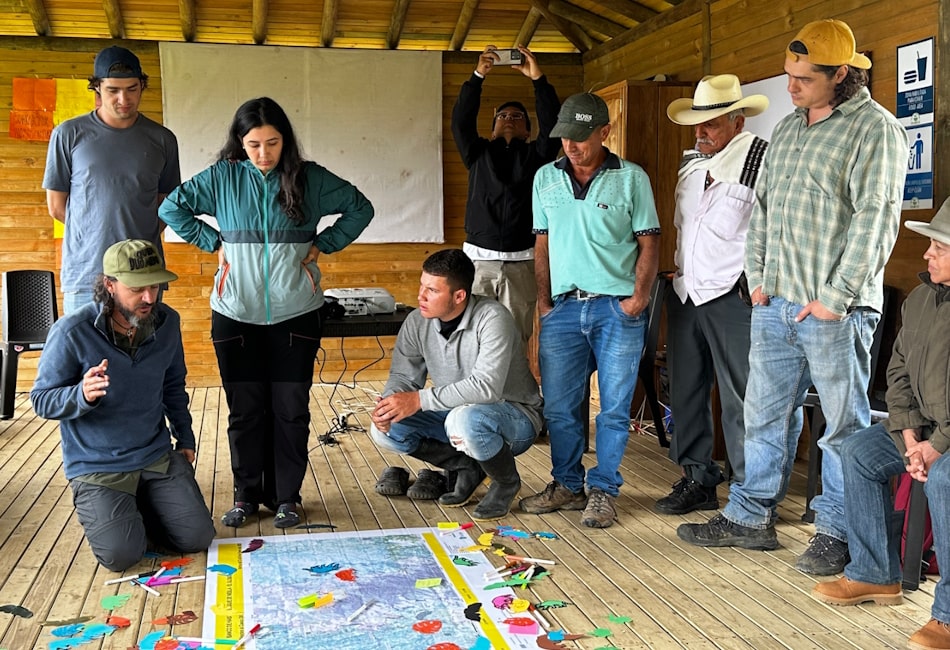
The El Globo Cloud Forest: A Sanctuary of Biodiversity at 2,800 Meters Above Sea Level
The El Globo Habitat Bank stands as a refuge for biodiversity and a tangible testament to the commitment to conservation. In this natural paradise, Terrasos and ISA, through their Conexión Jaguar program, are writing a new chapter in sustainability, where biodiversity and local communities converge to build a greener future.
The visit to the El Globo Habitat Bank, located in the highlands of Támesis (Antioquia), within the Cuchilla Jardín-Támesis Integrated Management District, was far more than a walk along mist-covered trails. It was a transformative experience that brought together business leaders, local authorities, tourism operators, and community members with a clear objective: to explore how conservation initiatives can serve as a key tool for protecting biodiversity while generating sustainable economic opportunities.
Today, El Globo Habitat Bank is one of the few sites offering voluntary biodiversity credits, implementing conservation and restoration practices. Its journey began 60 years ago as a cattle ranching project and has since evolved into a model of transformation, positively impacting the local community through environmental education programs and establishing a financial alternative for regional development based on biodiversity conservation.
The Conexión Jaguar program, led by ISA, played a pivotal role in this gathering. This initiative, which promotes solutions to mitigate climate change and conserve ecosystems, sees Habitat Banks as a unique opportunity to channel resources into critical areas, such as the El Globo Cloud Forest.
During the visit, participants learned how biodiversity credits and mechanisms like Tebu (10 square meters of biodiversity protected for 30 years) serve as innovative instruments to finance the conservation and restoration of 16,250 square meters of cloud forest in Támesis, Antioquia. These efforts aim to protect six water sources, 290 bird species, eight amphibian species, 24 reptile species, 12 fish species, 29 butterfly species, and 76 mammal species.
The event began with the participation of ISA representatives, including Cristian de la Pava and Andrés Durango, alongside local partners such as the mayor and community leaders. This space was not only an opportunity to explain the role of a Habitat Bank but also to establish its function in the region as a “good neighbor”, a project that does not impose solutions but fosters horizontal, collaborative relationships centered on community and sustainability.
Here, biodiversity is not just a natural heritage—it is also an opportunity to develop bioeconomy projects, sustainable tourism, and ecological restoration initiatives. As part of the activities, a social mapping exercise allowed participants to locate their farms, projects, and roles within the ecosystem, reinforcing the importance of collaboration to achieve concrete and verifiable conservation goals.
A Future in Bloom
The visit concluded with a stop at the Habitat Bank’s nursery, a space dedicated to the restoration of native species. Nestled in the foothills of the Western Cordillera, within the municipalities of Támesis and Jardín (Antioquia), at altitudes ranging from 2,400 to 2,800 meters above sea level, this nursery serves as a living testament to conservation in action. Under the guidance of local experts, attendees gained a deeper understanding of how each tree planted symbolizes a step toward ecosystem recovery—a reminder that biodiversity does not preserve itself; it requires dedicated hands and strategic alliances.
Through Conexión Jaguar, ISA is proving that sustainability is not just a goal but a shared responsibility. Their work signals the importance of high-impact, efficient projects in which the private sector recognizes the value of biodiversity protection through a transparent, traceable, and high-integrity instrument. This journey to the El Globo Habitat Bank left more than just an imprint on the forest, it left a lasting impact on the minds of those who participated. In the end, each person departed with a clear lesson: conservation is the only path to securing a future in harmony with nature and leaving a world that future generations can also enjoy.