



This is How the Biodiversity Market is Advancing in Colombia: We Invite You to Revisit Our Last Two Webinars
31/07/2025
CAR Establishes New Rules to Compensate Environmental Impacts in Cundinamarca
21/08/2025This is How the Biodiversity Market is Advancing in Colombia: We Invite You to Revisit Our Last Two Webinars
31/07/2025CAR Establishes New Rules to Compensate Environmental Impacts in Cundinamarca
21/08/2025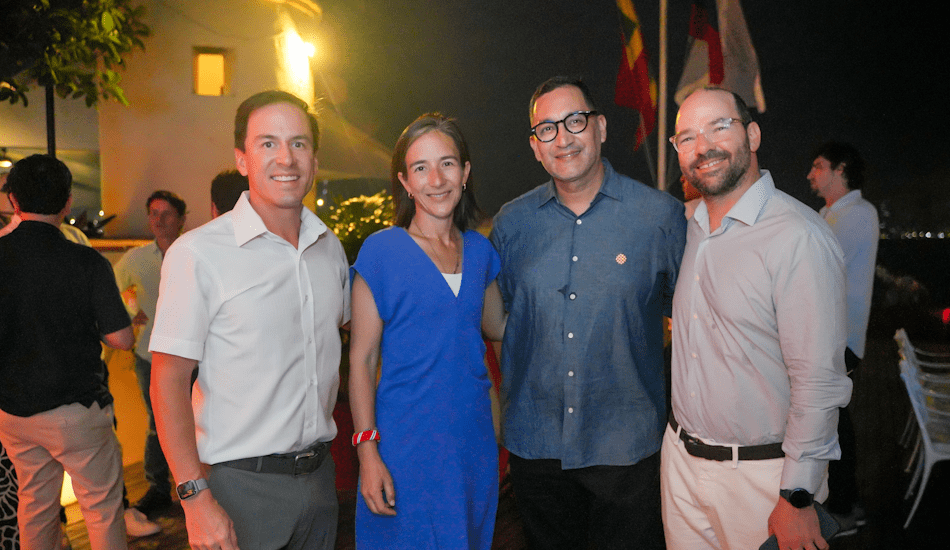
The business sector moves forward on a biodiversity agenda.
Cartagena, August 19, 2025. In a critical moment for both the environment and the economy in Colombia, business leaders gathered on August 13 at the 10th ANDI Business Congress to discuss how to protect the country’s natural wealth through innovative biodiversity financing.
The participating companies agreed on the urgency of developing a long-term vision for Colombia, where biodiversity is not treated as an environmental externality, but as a strategic infrastructure that underpins the country’s competitiveness. The conversation centered around how to mobilize investments that ensure operational resilience, access to sustainable markets, and the stability of value chains, all through nature-based solutions.
Organized by WRI Colombia, Terrasos, Fundación Santo Domingo, and Instiglio, with support from BID Lab and backing from the ANDI National Water and Biodiversity Center, the event focused on innovative mechanisms for financing biodiversity, such as payment-for-results schemes, biodiversity units, impact investing, and conservation contracts.
This dialogue promotes coordinated corporate action to protect biodiversity and position Colombia as a global laboratory for innovative conservation financing. To that end, this select group of CEOs, impact investors, and sustainability decision-makers exchanged opinions and expectations on biodiversity financing models, which have shown to generate economic value while restoring ecosystems in other countries.
Latin America, home to 40% of the world’s biodiversity, faces weak regulatory frameworks and scattered efforts that fail to stop the crisis. To reverse this, Target 19 of the Global Biodiversity Framework estimates that $200 billion annually will be needed by 2030.
In this context, Fernando Páez, Executive Director of WRI Colombia, emphasized the key role of the private sector: "We are meeting to catalyze investments that integrate nature protection with social and economic progress, recognizing that the conservation of biodiversity and its ecosystem services is essential for community well-being and the country’s resilience." He added, "Through this meeting, we aim to drive financing mechanisms that deliver tangible results in preserving ecosystems that sustain our future".
Meanwhile, Daniel González, Director of Social Investment at Fundación Santo Domingo, revealed how private capital can become a driving force in the global biodiversity agenda: "We are facing the greatest opportunity to align profitability with regeneration. Colombia is at a tipping point where it can become a global leader in how biodiversity is financed and protected. By linking financing to measurable outcomes, we enhance the effectiveness of investments and strengthen the trust necessary to mobilize resources on a large scale".
From a business perspective, Mariana Sarmiento, CEO of Terrasos, demonstrated with concrete examples how to turn ecosystems into strategic assets and pointed out, "The fate of our ecological infrastructure—the vital fabric upon which our survival depends—is being decided now, by transforming commitments into concrete actions through innovative models like Habitat Banks. Just as we have financed gray infrastructure for decades, such as bridges, roads, and networks that connect countries and unite us as a region, we must now recognize the value of the services biodiversity provides: water, pollination, climate regulation, and resilience".
During the event, three key themes were discussed: investment experiences in biodiversity, such as environmental offsets and partnerships with communities; barriers like the lack of common metrics and policy fragmentation; and solutions, including public-private financial instruments and clear standards to reduce risks for investors. This exercise allowed for capturing the voices of the business sector, highlighting both the opportunities and specific challenges for scaling up biodiversity investment from the private sector.
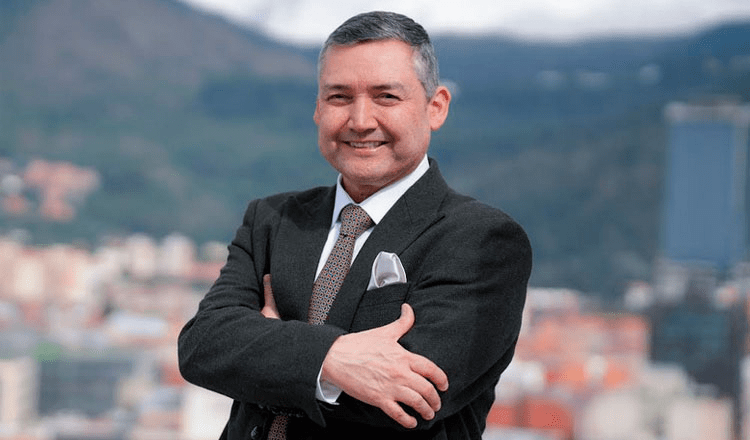
Sergio Rengifo, Executive Director of CECODES, noted, "Companies are already doing a lot on sustainability; we need to simplify the language around nature and share success stories so sectors can better understand their dependencies on nature, and move forward with confidence and scalability".
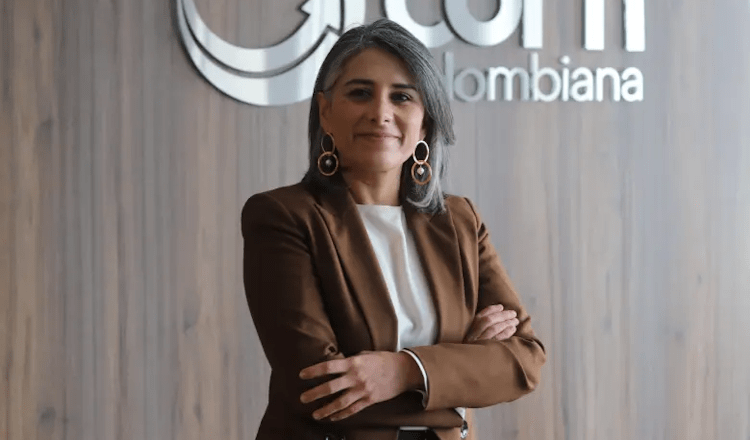
Lina María Mondragón, Vice President of Strategy and Sustainability at Corficolombiana, emphasized, "We are working to ensure that the sustainability agenda serves the risk management needs of the Corporation and the companies in our portfolio. One way to incentivize this conversation, aimed at strengthening our relationship with nature and communities, is through concrete actions that allow us to identify opportunities to improve the resilience of activities and infrastructure with nature-based solutions, while conserving and protecting the ecosystems around us".

In the same vein, Alejandra Robledo, Shared Value Manager at Constructora Bolívar, added, "Companies are committed, but we need clear business models that are understandable to financial teams, showing how investment in biodiversity reduces risks and improves operational stability".
At the conclusion of the event, Sebastián Chaskel, Partner at Instiglio, summed up the general call from participants: the urgency to "recognize that nature and biodiversity unite us as a country, and that in order to maintain these resources, on which we depend, we must come together to invest in our future", highlighting that results-based financing mechanisms align private capital with real environmental impacts, ensuring that every dollar invested generates tangible benefits for businesses, communities, and ecosystems.
This meeting was a pivotal milestone in demonstrating, through concrete actions and cases, that investing in biodiversity is strategic and profitable for the private sector. For the event organizers, the next step will be to create a roadmap to drive nature-based financial solutions, strengthen governance, mobilize capital, and position Colombia as a benchmark for integrating biodiversity into economic development. .
This event was made possible by:

An independent research organization that turns ideas into action to improve people's lives, protect nature, and address climate change. We work alongside national and local governments, communities, academia, the private sector, and social organizations to formulate and implement policies, projects, and tools that accelerate transformations toward sustainability.
More about WRI:
• Financing nature is good business. Here's how companies can start.
• Natural infrastructure: A cost-effective alternative in the race to supply clean water to Bogotá

A pioneer in structuring and operating biodiversity investment mechanisms, such as Habitat Banks and voluntary credits, with technical support and traceability for measurable and permanent conservation outcomes.
More about Terrasos:
A philanthropic entity driving social and economic development in Colombia, with impact investments and programs that create well-being and sustainable opportunities for communities across the country.
More about Fundación Santo Domingo:

A global nonprofit organization dedicated to transforming effectiveness and accelerating the impact of governments and development organizations, tackling challenges in the implementation of projects and public policies. Since 2012, Instiglio has pioneered results-based financing and performance management approaches to ensure that every dollar invested in social development and climate outcomes has the greatest possible impact.
Blog about our work:
• Mobilizing private financing for climate and nature: Turning risks into opportunities
Website: