



A Letter from the Mountains
26/06/2025
Peru to Mobilize USD 500 Million for Biodiversity Conservation by 2027
31/07/2025A Letter from the Mountains
26/06/2025Peru to Mobilize USD 500 Million for Biodiversity Conservation by 2027
31/07/2025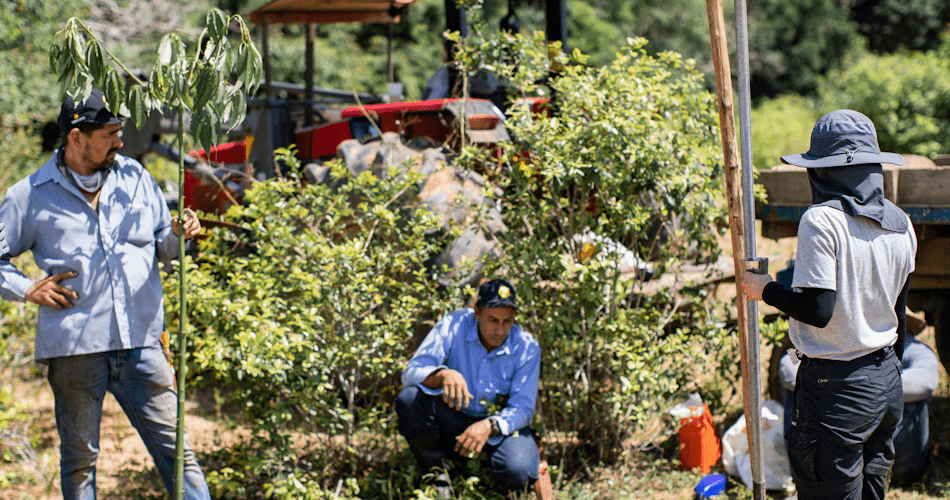
BH Meta: Where Time Stands Still and Life Prevails
In the department of Meta, one of the most ambitious and discreet biodiversity conservation efforts in our country is unfolding through the fulfillment of environmental obligations: the Meta Habitat Bank (BHM). This initiative emerged from the interests of the landowners and Terrasos, a company specializing in environmental investments, with the aim of creating an innovative project that generates both impact and profit through conservation.
The first Habitat Bank in Latin America, it began its operations and structuring over ten years ago in eastern Colombia, confronting significant environmental challenges due to the region's agricultural, mining, and oil activities. Its purpose has been to energize the biodiversity conservation process on private land.
For several decades, conservation activities have been carried out in some areas of the eastern plains, which is crucial as this region lies at a convergence point between a megadiverse zone—the Orinoquia region, an ecosystem strategically important for its biodiversity and environmental services. Today, ongoing efforts have protected endemic species, maintained biological corridors, and mitigated environmental impacts, ensuring an ecological balance that is vital for both present and future generations.
Additionally, the ongoing work in this area has fostered active participation from local communities, integrating traditional knowledge with scientific approaches for sustainable land management. This inclusive conservation model not only strengthens ecosystem resilience but also promotes the socio-economic development of the region under principles of environmental responsibility. .
At a Glance: Key Figures of the Project
The Meta Habitat Bank currently covers 1,352 hectares, which include morichales, savannas, and gallery forests. These ecosystems serve as migration routes and refuges for wildlife. It is a management unit composed of four properties—Matarredonda, Rey Zamuro, El Recreo, and La Colmena. In this land, water dominates: it floods everything for months, only to recede, leaving behind cracked and fertile soil. It is a land of contrasts where the jaguar and capybara share ancient silences beneath an immense sky. This territory also channels the environmental obligations of eight projects across six clients in the oil and energy sectors.
Notably, the BHM has experienced continuous growth, officially recognized by the Ministry of Environment and Sustainable Development. For example, in 2017, the bank had 629 registered hectares; by 2023, it expanded to 1,126 hectares, with 646.03 hectares assigned, 12.03 hectares in the contractual phase, 454.55 hectares available, and 13.84 hectares allocated for bank facilities and infrastructure. Following the second expansion, an additional 225.64 hectares are now available.
Architects of the Forest: The Structural Role of Native Species
As of December 31, 2024, there are 30,083 seedlings from 35 native species that have been meticulously cared for. Some are just beginning—593 are in germination beds—while others show their strength, with 11,709 growing in development areas and 17,781 in hardening areas, with apical growth ranging between 3 and 55 cm.
Among the species sprouting from the bank are names that evoke the jungle and the wind: Hymenaea courbaril (Algarrobo), Copaifera pubiflora (Copaiba), Handroanthus serratifolius (Guayacán amarillo), Enterolobium cyclocarpum (Oreja de negro), Pseudosamanea guachapele (Guácimo), among others.
These species were chosen not only for their beauty and resilience but because they are the architects of the forest, capable of weaving together the vital structure of a healthy ecosystem with their roots and canopies. This is essential for the morichales, savannas, and riverine forests in the region.
The process is neither immediate nor simple. Rescuing seedlings in the field, maintaining them in nurseries, acclimating them, and only then reintroducing them requires precision and patience. Meanwhile, sensitive areas such as wetlands, water sources, and ecological corridors are safeguarded, protected, and closely monitored, even though no direct intervention occurs there.
None of this work would be possible without the dedication of those on the ground every day. César Augusto Barrera Tamayo, Legal Representative of Rey Zamuro SAS, is the operator, interpreting the language of the landscape with every step. He is supported by Juan David Rodriguez, the BHM Ranger, who not only cares for the seedlings, monitors water sources, and repairs fences but also bridges knowledge between ecosystems. In 2024, he shared his experience with the teams of other Habitat Banks—La Lope, Mata de Lata, and Cañón del Río Cauca—located in Tropical Dry Forests, enriching them with his knowledge of nursery processes. His experience, grounded in a Tropical Wet Forest, water management during critical periods, and the savannas of the BHM, also allowed him to learn from the very different ecosystems he worked in. .
"The forest does not restore itself. It needs eyes that read it every day, hands that care for it, and decisions that stand the test of time".
— Juan David, Ranger of the Meta Habitat Bank
Environmental Responsibility that Transforms Territories
This commitment has been made possible thanks to clients who today bet on conservation through responsibility. Preserving and restoring does not solely fall on the land; institutional support is key to sustaining operations. In 2024 alone, there were 11 technical visits to the BHM, including operational follow-ups, tours with environmental authorities, and client visits. Every trip involves logistics, coordination, resources, and commitment. Every presence on the ground reflects the desire to turn environmental compensation or investment into a concrete, measurable, and permanent action. Notably, some clients have committed to a mandatory investment of at least 1%.
Among the clients currently directing their environmental obligations to the BHM are: The Bogotá Energy Group, The Oil and Natural Gas Corporation Limited, Oleoducto Central S.A., Vetra Exploration and Production Colombia S.A.S., Cenit Hydrocarbons Transport and Logistics S.A.S., and Oleoducto de los Llanos Orientales S.A.
To date, 646.03 hectares have been assigned to the Ministry of Environment and Sustainable Development (MADS) as part of these clients' environmental licensing and management obligations.This is where environmental compensation goes beyond being a mere procedure, evolving into a profound investment in time, the health of the land, and a chance for us to reconcile with nature.
The Meta Habitat Bank is more than just an environmental project; it is a story of people who believe in the land, its cycles, and its healing capacity. Behind every hectare restored, there are farmer hands planting with patience, technicians listening to the whispers of the morichales, and communities teaching us, with their ancestral wisdom, how to coexist with the landscape. The companies supporting this initiative are not just fulfilling a legal obligation; they are investing in a future where the children of Meta will continue to see the azulejo, the cucarachero, or the copetón crossing the sky and where rivers, thanks to the forests that protect them, will continue to sing.
Here, there are no magic solutions or shortcuts—just days spent under the sun caring for seedlings, meetings with elders who know the secrets of the plains, and nights spent vigilantly ensuring a safe corridor for the jaguar. It is slow work, like the growth of a tree, but unstoppable. When conservation is done with the heart, every small achievement—a green shoot, the return of a bird, the clear water of a stream—becomes a shared victory. The Meta Habitat Bank reminds us that another world is possible, and that it is built together, one day at a time.