



ISA and Terrasos, pioneers in biodiversity credits to protect endangered species.
26/08/2024
GAIA Hypothesis Expansion: The Need to Broaden the Concept of Ecosystem Conservation
24/09/2024ISA and Terrasos, pioneers in biodiversity credits to protect endangered species.
26/08/2024GAIA Hypothesis Expansion: The Need to Broaden the Concept of Ecosystem Conservation
24/09/2024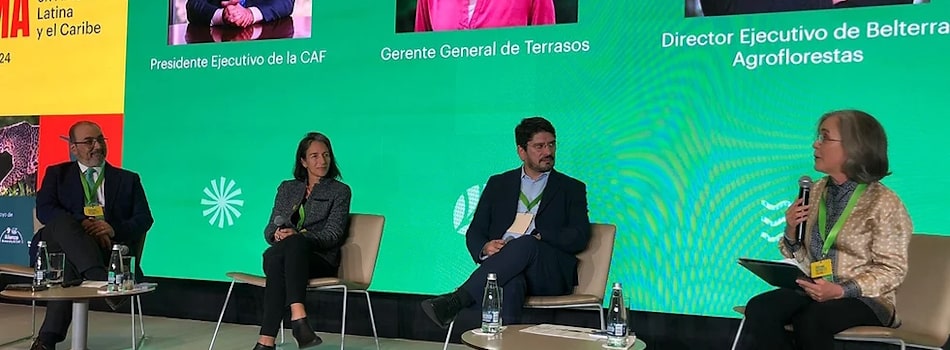
Terrasos at the meeting “People, Nature and Climate in Latin America and the Caribbean”.
On August 27, 2024, the event "People, Nature and Climate in Latin America and the Caribbean" was held in Bogotá. It was organized by the Rockefeller Foundation, WWF Colombia, and the Compaz Foundation, and took place at the Agora Convention Center. The event brought together renowned national and international spokespersons on environmental issues throughout the day. Discussions focused on the challenges the region is facing in light of the climate crisis, with an emphasis on preparations for the COP16 to be held in Cali in October and the COP30 to be held in Brazil in 2025.
Panel Investing in Nature: Towards a New Financial System for Biodiversity Protection and Climate Action.
Terrasos, led by Mariana Sarmiento, engaged in a discussion forum centered on the following theme: The event, entitled "Investing in Nature: Towards a New Financial System for Biodiversity and Climate Action," featured panelists including Sergio Díaz-Granados, Executive President of CAF - Development Bank of Latin America and the Caribbean, and Valmir Ortega, Executive Director of Belterra Agroflorestas. Paula Caballero, Regional Director for Latin America of The Nature Conservancy, moderated the proceedings.
The panel addressed one of the most critical issues of our time: the financing required to achieve the goals of the new global biodiversity framework, sustainable development, and climate objectives. In a context where the financing needs for biodiversity conservation are significant, the role of financial institutions is vital to meet national and international goals.
During the discussion, panelists concurred on the necessity of investigating and implementing novel financial instruments to finance ecosystem conservation and restoration. Among the mechanisms discussed were debt-for-nature swaps, green bonds, insurance against invasive species, and environmental asset markets. These instruments, they stated, are vital to mobilize the requisite resources and guarantee sufficient financing for Latin America and the Caribbean to solidify its role as a solution region in the fight against the global and biodiversity crisis.
"By establishing a clear model, we can ensure that biodiversity conservation is not merely a matter of making payments, but rather of guaranteeing that these funds are allocated effectively and generate tangible results. Currently, we are discussing the potential of investing seven hundred billion pesos in the country's territories, which are currently untapped by companies," said Mariana Sarmiento, CEO of Terrasos.
With a call to action, urging governments, financial institutions and private sector actors to work together to implement financial solutions that support conservation and climate action as pillars of sustainable development in the region.
The panel determined that, with sufficient funding, Latin America and the Caribbean can maintain its position as a pivotal region in the global effort to address environmental challenges. It can enhance the quality of life for current and future generations through innovative financing strategies for biodiversity conservation, restoration, and climate action, thereby becoming a catalyst for green growth in the region.