




Vivero “El Cucarachero Paisa” receives ICA certification: A key step for the technical assurance of Tropical Dry Forest restoration in Antioquia.
14/07/2026
Terrasos to Take Colombian Experience in Biodiversity Financing to COP17
26/10/2026Vivero “El Cucarachero Paisa” receives ICA certification: A key step for the technical assurance of Tropical Dry Forest restoration in Antioquia.
14/07/2026Terrasos to Take Colombian Experience in Biodiversity Financing to COP17
26/10/2026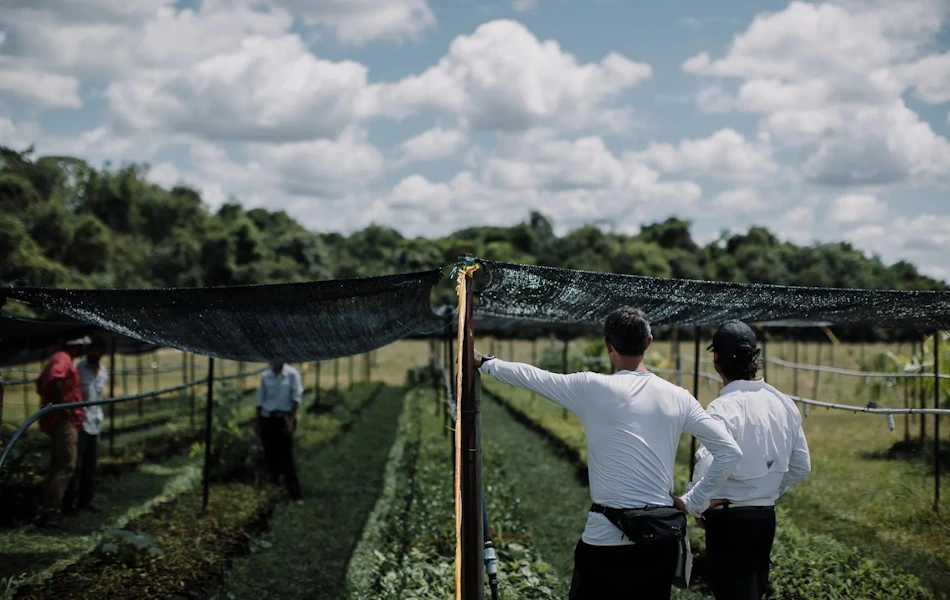
OCENSA and Terrasos Complete Colombia's First Full Environmental Obligation Cycle Through a Habitat Bank
Bogotá, August 2026.
In an unprecedented milestone for sustainability and infrastructure in the country, OCENSA (Oleoducto Central S.A.) and Terrasos have announced the definitive and successful closure of the hydrocarbon company's mandatory obligation to invest at least 1%. The fulfillment of this commitment, formally validated by the National Authority for Environmental Licenses (ANLA), marks a historic milestone: it is the first time in Colombia and Latin America that an environmental obligation has successfully completed its full cycle under a Habitat Bank mechanism.
Originally stemming from water use in the Cusiana-Coveñas Pipeline project (file LAM0318), the obligation was executed over 5 years in the Meta Habitat Bank, a long-term conservation project that protects the Tropical Rainforest.
A Model of Technical, Legal, and Financial Efficiency Through Pay-for-Results
The investment of approximately 7.3 billion COP was executed between 2020 and 2024. Unlike traditional decentralized compensation schemes, which often face unforeseen events and cost overruns, this project implemented a pay-for-results model structured around five audited technical, legal, and financial compliance milestones.
Under this approach, 100% of the costs were directly allocated to the value of the 1% obligation, eliminating budget increases for the investor and ensuring that every peso translated into an ecological positive impact on the ground that will endure for 20 more years.
Concrete Actions in the Orinoquia Region
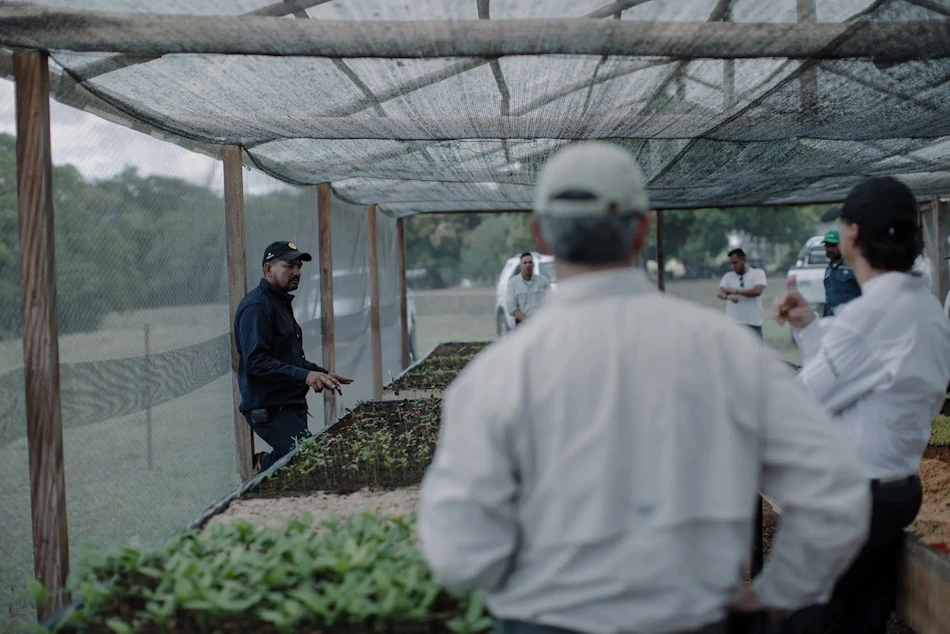
Photo: Juan David Rodríguez, park ranger and nurseryman at the Meta Habitat Bank.
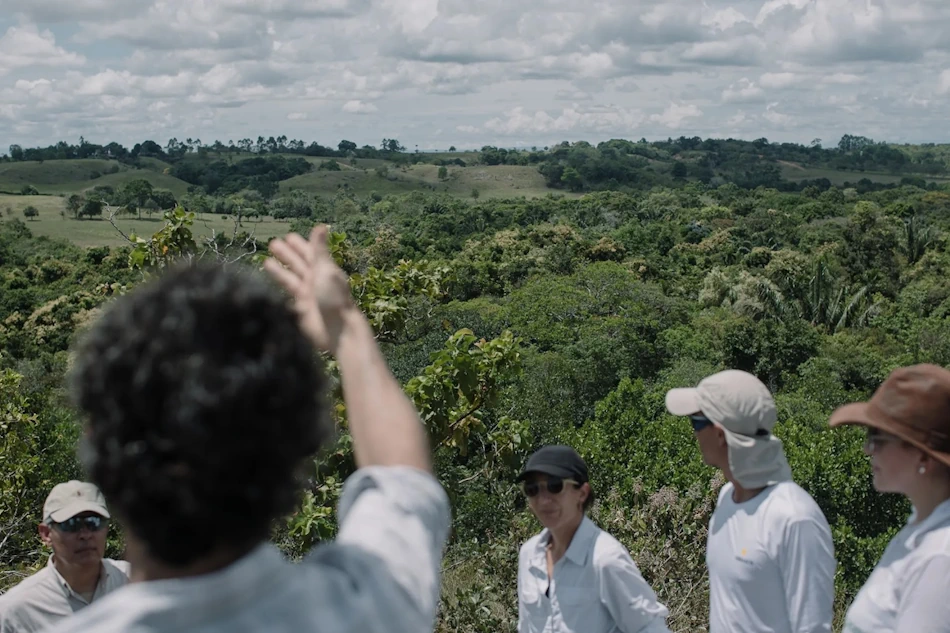
The project was implemented across 205.55 hectares of strategic ecosystems within the Meta Habitat Bank (BHM), located in the municipality of San Martín and registered with the Ministry of Environment and Sustainable Development (MADS) on November 10, 2017. Physical custody and on-site operations were carried out by the Rey Zamuro-Matarredonda Natural Reserves under the technical assistance of Terrasos.
Over the five years of execution, the actions under the investment line: conservation, restoration, recovery, and/or rehabilitation of strategic ecosystems for the conservation of water resources in the BHM, closely followed the investment plan schedule approved by the environmental authority, with the following results:
-
More than 50 kilometers of fencing installed to isolate the area from external anthropogenic pressures.
- 3 kilometers of firebreaks for the mitigation and management of potential forest fires.
-
Biodiversity monitoring, through tracking of the flora component.
-
Community outreach strategies focused on strengthening environmental governance and promoting local best practices to reduce stressors such as hunting, burning, and timber extraction.
Continuous biodiversity monitoring of the ecosystem not only demonstrated positive changes in flora species composition and richness, but also confirmed an increase in habitat stability for fauna, recording the safe transit of emblematic species under some degree of threat, such as the lowland tapir and the puma.
Legal Certainty and Long-Term Permanence
The environmental authority's endorsement was ratified via filing No. 20264300635301 issued by ANLA. This administrative act, with full legal effects, closes the environmental obligation for good, with no further resolutions required..This demonstrates the technical viability and legal maturity that Habitat Banks offer to the corporate market.
One of the great advantages of this mechanism lies in its long-term vision: while the contractual fulfillment of the legal obligation was structured over five years, the preservation actions are secured for 20 more years in the territory. The financial resources required for this sustenance are safeguarded through a trust (patrimonio autónomo) managed by Bancolombia, guaranteeing a predictable cash flow so that Terrasos, in its role as BHM manager, can continue safeguarding the tropical rainforest over the coming decades.
The executive management of Terrasos highlighted the value of this precedent for the country:
"The closure of this obligation in the BHM, not only validates our work but also positions Colombia as a benchmark in innovative conservation mechanisms. Today, the communities of San Martín have a protected, monitored area equipped with tools that facilitate its care and appropriation. This achievement proves that it is possible to attain greater legal certainty, technical compliance, and a real impact on biodiversity, generating a replicable model for future environmental investments”.
This success case proves that Habitat Banks work and are the ideal tool for unifying environmental obligations. To continue multiplying these impacts across the country, the system must continue moving toward increasingly clear rules and legal certainties that provide maximum confidence to all actors in the private sector, the State, and rural communities.
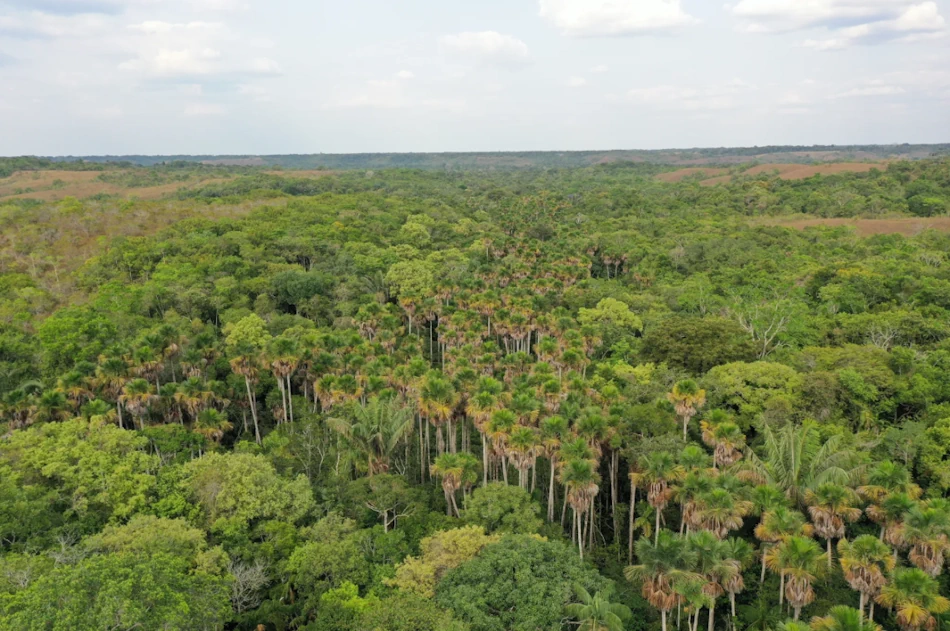 Photo: Meta Habitat Bank.
Optimize your organization's environmental compliance with technical, legal, and financial backing.
Does your company have biotic compensation obligations or mandatory investments of no less than 1% pending execution? Avoid logistical cost overruns, mitigate regulatory risks, and secure the permanence of your environmental impact through a conservation portfolio of high technical standards.